
Moving
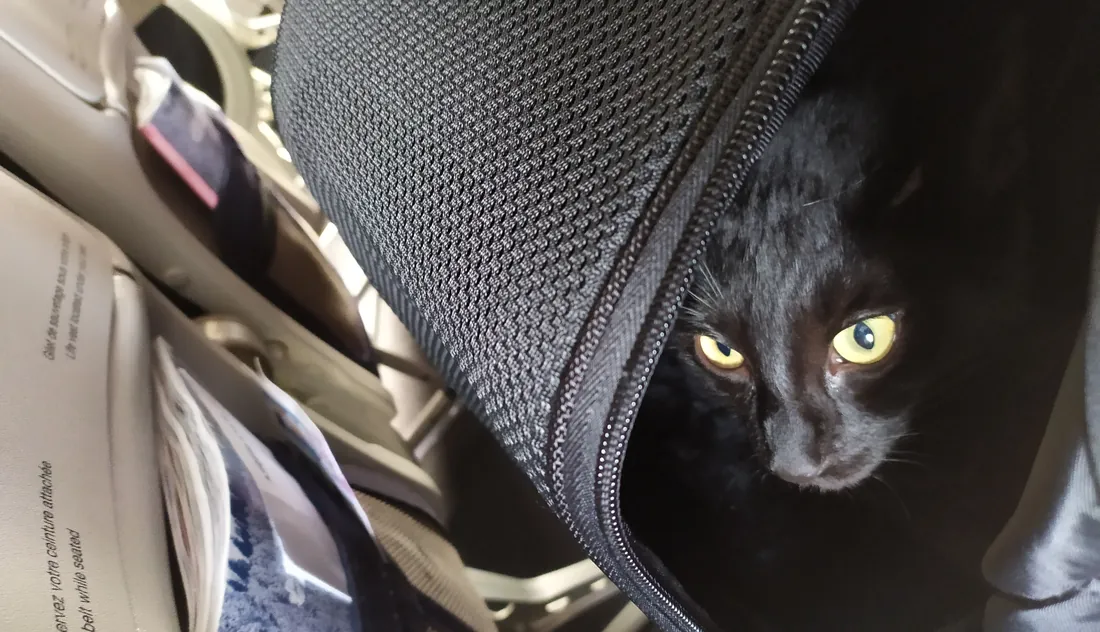
Of everything in a move, the animal has the longest lead time and the highest failure rate. The paperwork itself is not hard. The order is. Put one step in the wrong place and you restart a clock measured in months.
This guide works backwards from the flight, because that is the only way the dates make sense. Requirements differ by the country you are leaving, and they change.
The mistake that costs months
The microchip goes in before the rabies vaccination.
Thailand’s Department of Livestock Development (DLD) asks for a microchip implantation certificate with the import permit application, and the microchip number has to appear on the vaccination records you submit alongside it. If the chip was not in the animal on the day it was vaccinated, that number cannot honestly appear on that record.
The rule is stricter still if you might ever go back. Great Britain’s import rules say a pet must be microchipped before, or at the same time as, its rabies vaccination. A vaccination given to an unchipped animal does not count, and the course has to be redone. The EU works the same way. So chip first, vaccinate second, and keep both certificates.
The chip must meet ISO 11784 or Annex A of ISO 11785, which is the 15-digit standard. If your animal was chipped years ago with something else, have it read and checked now, not in the departure week.
Sixteen weeks out: rabies and the rest
A primary rabies vaccination counts only if the animal was at least 12 weeks old on the day it was given, and it must be administered not less than 21 days before departure. A booster given while a previous vaccination is still valid does not need the 21-day wait, provided you can produce the unbroken history.
Do the arithmetic and the practical floor for a puppy or kitten is around four months of age. USDA APHIS states the same minimum for pets travelling from the United States to Thailand.
Rabies is not the only one. Dogs also need distemper, hepatitis and parvovirus, each at least 21 days before departure, plus leptospirosis. Failing a valid leptospirosis vaccination, a negative leptospirosis test within 30 days of departure is accepted instead. Cats need feline panleukopenia.
Does your animal need a rabies blood test?
A rabies antibody titre test, FAVN or RNATT, measures whether the vaccination actually worked. Whether you need one depends on where you are going and where you have been.
For entry into Thailand it is not a standard requirement from any country. Thailand’s route is vaccination-based: either the origin country has been free of rabies for the past 12 months, or the animal is vaccinated at least 21 days before departure. It is not currently a condition of entry.
The countries that do demand one are the high-biosecurity group, including Japan, Australia, New Zealand and Hawaii, plus the EU and Great Britain for animals arriving from countries not on their listed schedule.
That last category matters more than people realise, because Thailand is one of those unlisted countries. If there is any chance you will take the animal back to the UK, the GB sequence runs: blood sample taken at least 30 days after the rabies vaccination, a result of at least 0.5 IU/ml, then a three-month wait from the date of the sample before travel. Doing the test before you leave, while you still have an approved lab, can save you three months later.
Eight to four weeks out: the DLD import permit
You apply on Form R1/1, by email, to the animal quarantine station at the Thai airport your pet will land at. Suvarnabhumi, Chiang Mai, Phuket and the rest each have their own address, published by the DLD.
With the form you send a copy of your passport, a clear photograph of the animal, the flight itinerary, the vaccination record in English, and the microchip certificate.
Timing is fixed at both ends: no earlier than 60 days before departure and no later than seven days. Official guidance points at three to seven business days for processing, so 30 days ahead is the sensible target. The approval issued, the notice of import approval on Form R.6, is valid for 60 days from the date of issue.
You need it before you fly. It is not something you sort out on landing.
Ten days out: the export health certificate
This has the tightest window of the lot, and it is the reason people rebook flights.
From the UK, the document is export health certificate 2917, applied for through APHA’s online service and signed by an official veterinarian. It is valid for 10 days from the date of signature.
From the US, it is an official health certificate completed by a USDA-accredited veterinarian and endorsed by USDA APHIS Veterinary Services. It is valid for 10 days from the date of endorsement. The endorsed original travels with the animal, ink signature and stamp included. Electronic copies are refused at the Thai quarantine station.
Ten days sounds generous until you add a vet appointment, a courier run to and from the endorsing office, and a weekend.
The flight
Here the rules stop being national and start being commercial, and this is where they vary most.
Cabin, hold or cargo. Only small dogs and cats can travel in the cabin, and many carriers do not allow it at all. Thai Airways does not carry pets in the cabin apart from service dogs. Everything else flies as checked baggage in a heated, ventilated hold, or as manifest cargo. Manifest cargo is usually the only option for a large dog or an animal travelling unaccompanied, and it is booked with the airline’s cargo division rather than added to your passenger reservation.
Crate. IATA’s Live Animals Regulations set the container standard: long enough for the animal to stand, turn and lie down, with ventilation on more than one side. Snub-nosed breeds need a container about 10 per cent larger than the calculation would otherwise give.
Heat. Airlines refuse animals in the hold when temperatures on the route rise above roughly 29°C, and the threshold drops further for snub-nosed breeds. It applies at every point of the journey, including the tarmac at both ends and any transit stop. Bangkok is warm all year. Night flights and cooler-season departures are not a refinement here. They are often the only way the booking is accepted.
Breed. Thai Airways does not accept brachycephalic breeds as checked baggage: bulldogs, pugs, French bulldogs, Boston terriers, boxers, shih tzus, pekingese and similar. IATA’s own guidance says transporting snub-nosed dogs in hot weather is not recommended, because they struggle to maintain a normal body temperature. Some carriers also refuse particular breeds outright, and Thai Airways will not carry pit bull terriers, American Staffordshire terriers or Staffordshire bull terriers.
This next part we will not soften. If you have an elderly bulldog, or a French bulldog with a history of breathing trouble, or a dog that no carrier on any routing will accept in the season you need to move, you may not be able to bring the animal. Rehoming with someone you trust, or delaying the move by a year, are real answers that people reach. Find out early, while you still have options, rather than six weeks before the container ships.
Arrival and the animal quarantine station
Pets must land at an airport with a DLD animal quarantine station. There are six: Suvarnabhumi, Don Mueang, Chiang Mai, Phuket, Samui and Krabi. In practice, anything moving as cargo comes through Suvarnabhumi.
At the station you present the original passport, the original vaccination book, the endorsed health certificate and a printed copy of the import permit. An officer inspects the animal, checks the chip against the paperwork and issues the import licence, Form R.7. The fee is ฿500 per animal, in cash.
Hours matter. The hand-carry desk in the arrivals hall runs around the clock. The cargo terminal station keeps office hours, Monday to Friday. An animal landing on Friday evening as cargo waits until Monday, at your cost.
Quarantine is not routine. A healthy animal with complete papers is normally released the same day. But the quarantine officer keeps the power to detain an animal for 30 days at the owner’s expense if the documents are wrong or the animal appears unwell, and in the worst cases the options narrow to re-export. Most quarantine stories you read online started as paperwork stories.
What it costs
Treat these as indicative. They are published ranges, not quotes, and the spread is real.
One UK shipper’s published pricing puts a dog to Thailand somewhere between £1,400 and £4,500, and a cat at around £1,400 to £1,500. The airline charge is the largest item, followed by the crate, veterinary work, government endorsement, customs clearance and ground transport at each end. On the Thai side the state charge is small, at ฿500 per animal.
The variation is driven mostly by size, because airlines price by the volume of the crate. A great dane and a whippet are different propositions. After that: direct versus connecting routes, season, whether you use an agent, and whether anything has to be redone.
Hua Hin, once you have landed
Suvarnabhumi to Hua Hin is roughly 200 kilometres by road, about three hours in reasonable traffic. Plan that leg before you fly. A dog that has been in a crate for 13 hours should not also wait while you negotiate a taxi.
Hua Hin has small-animal veterinary clinics, and local vets are used to imported pets. We will not list names or prices here, because both change; ask us for a current answer.
One local note. Bangkok’s pet ordinance, in force from 10 January 2026, sets registration, microchip and per-household limits. It applies inside Bangkok Metropolitan Administration boundaries only, not in Hua Hin. Worth reading if you are staying in Bangkok before moving south.
For how the animal fits around the rest of the move, see our twelve-month checklist and our guide to shipping your life to Thailand. Where you live matters too, from ground-floor access to whether the building accepts dogs at all: see where to live in Hua Hin.
Rules change, and they differ by country
Requirements depend on the country you are leaving, and both Thailand and the origin authorities revise them. Airline policies change faster still, sometimes mid-season.
Confirm the current position with the DLD quarantine station at your arrival airport, and with the airline itself, before you commit to dates. Do not rely on any web page, this one included.
What to do next
Fix the flight month first, then work backwards. Permit at 30 days. Health certificate at 10. Vaccinations at least 21 days before that. Microchip before all of it.
Ask the airline the awkward question about your breed and your season before anything else, because that answer decides the rest.
If you want a second pair of eyes on the dates, send us the animal’s age, breed, chip status and vaccination history, and your intended month. We will tell you what looks tight and what looks fine.
Please check before you act. Thai visa, tax, banking and property rules change,
and different offices and consulates interpret them differently. Everything here is a starting point, not advice.
Confirm your own position with the Thai embassy or consulate you will use, the Immigration Bureau, and where money
or law is involved, a qualified Thai professional. Last reviewed 31 July 2026.
Not sure where to start?
Thirty minutes on a call, no obligation. We will tell you what is realistic for your timeline and what to do first.
Book a free consultationKeep reading

Property
The Nominee Company Crackdown, and What It Means If You "Own" a Hua Hin Villa
Thailand's nominee-company crackdown now reaches Prachuap Khiri Khan. The DBD orders, the 1 August 2026 b…
Visas
Thailand Is Cutting Visa-Free Stays To 30 Days. Here Is Where It Actually Stands.
Thailand has approved cutting visa-free stays from 60 days to 30. As of 3 August 2026 it is not yet law. …

Property
Thai Property Law in 2026: What Is Law, and What Is Still a Press Release
The 99-year lease, the 75% condo quota, 30+30+30 renewals. What is actually law in August 2026, what was …