
Housing
Most people choose a Hua Hin address the same way. Two weeks in a hotel on the beach road in January, a property listing with good photographs, then a year’s lease. October arrives, the soi floods, the school run turns out to be 40 minutes each way, and the nearest shop that stocks what you cook with is a half-hour drive north.
The best neighbourhoods in Hua Hin for expats are not the ones that photograph well. They are the ones whose downsides you can live with for twelve months. Below are five areas, what each costs, how far each sits from the things you will actually need, and what will irritate you about it.
Every rent figure here is indicative: a realistic monthly range for a furnished long-term let, drawn from current asking prices. Real numbers move with the season, the building and how well you negotiate. The same unit is a different price in June and in December.
Hua Hin town centre and the beach
Indicative rent: ฿15,000–25,000 for a one-bedroom condo, ฿25,000–45,000 for two bedrooms or anything with a working sea view. Older Thai-style apartments on the back sois start nearer ฿8,000.
This is the reference point. Everything else in this guide is measured as a drive from here.
The daily reality is that you can live in the centre without a vehicle, which is unusual in Thailand and is most of what you are paying for. Market Village and Bluport are walkable, or a short motorbike taxi ride. The night market, the fish market, immigration, the banks and the post office are all inside a small grid. Bangkok Hospital Hua Hin and San Paulo Hospital both sit on Petchkasem Road within the town, so an ambulance ride is measured in minutes, not half-hours. For schools, the BECC and Beaconhouse Yamsaard are in or near town; Hua Hin International School is out at Hin Lek Fai, which is a 15 to 20 minute drive.
The downside is the season. From December to February the town fills, and Petchkasem Road slows to a crawl in both directions. Add Bangkok weekenders every Friday evening and Sunday afternoon, year round. The beach in front of the town is not the best sand on this coast. And condo living in the centre means holiday lets above and below you, which means suitcase wheels at midnight and a full pool at New Year.
It suits a first year, a couple without children, anyone who does not want to drive, and anyone with frequent hospital appointments. It does not suit you if you want a garden, quiet, or square metres for your money.
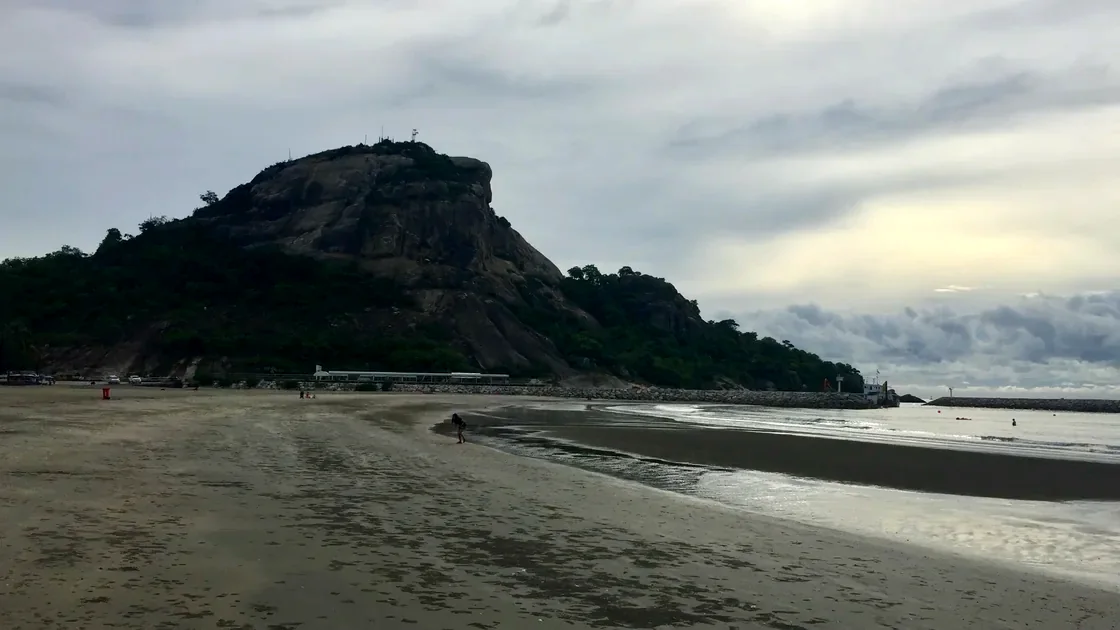
Khao Takiab and Monkey Hill
Indicative rent: ฿10,000–25,000 for one bedroom, ฿20,000–45,000 for two, and ฿40,000–85,000 for a three-bedroom with a genuine sea view. Distance: about five kilometres south, 10 to 15 minutes off-season, closer to half an hour on a high-season Saturday.
This is where the settled expat community lives, much of it Scandinavian, German and British, a lot of it here for more than a decade. The beach is better than the town beach. There are bakeries, a working set of restaurants, and neighbours who have already made every mistake you are about to make. Cicada and Tamarind markets are close.
The monkeys are not a novelty item. They open unlatched balcony doors, take food off tables and occasionally bite. Higher floors are fine. Ground and second floor units need discipline about doors and bins. Do not feed them, and do not let visitors feed them either.
Bangkok Hospital and San Paulo are 10 to 15 minutes north in normal traffic, and there is a Bangkok Hospital clinic at Market Village for routine appointments. Hua Hin International School is roughly 20 to 25 minutes via the bypass.
The honest downside is that Khao Takiab funnels onto one main route. When that route stops, you stop. The area is also condo-heavy, so a large share of your building is short-term rental, with the turnover and the noise that brings. In low season, some of the restaurants you liked in February will be closed.
Cha-am
Indicative rent: ฿3,000–8,000 for a Thai-style apartment, ฿10,000–20,000 for a condo aimed at foreigners, ฿15,000–30,000 for a house. Distance: roughly 25 kilometres north, 30 to 35 minutes on Petchkasem, longer on a Friday evening.
Cha-am is a Thai resort town that happens to have foreigners in it, rather than the reverse. Deckchairs and inner tubes on the sand, grilled squid, Thai families down from Bangkok at weekends, a long quiet beach mid-week. Fewer English menus. Your Thai will improve, because it has to.
For medical care, be clear-eyed. Cha-am has a government hospital and clinics that handle ordinary things. The private hospitals expats usually end up using are in Hua Hin, which is 30 minutes away in good traffic. If someone in the household has a cardiac history or a standing weekly appointment, that half-hour is the whole argument.
There is no international school in Cha-am. The school run to Hua Hin is 35 to 50 minutes each way depending on the hour, twice a day, every day, in term time.
The real downside is smaller and more grinding than either of those. You drive for everything imported. Cheese, wine, a particular medicine, a decent drill bit, the supermarket that stocks your brand of anything. It becomes a weekly expedition rather than an errand. Some people find that clarifying. Others find, in month four, that they have started skipping the trip and are quietly living on less than they wanted.
Cha-am suits a tighter budget, a driver, and someone who wants a more Thai daily life. It does not suit families with school-age children or anyone without a licence.
Pranburi
Indicative rent: ฿15,000–35,000 for a two or three-bedroom house, ฿25,000–60,000 and upwards for a furnished pool villa. Distance: about 30 kilometres south, roughly 30 minutes to central Hua Hin on the bypass. Pak Nam Pran is the coastal end of it.
What you buy in Pranburi is space. Land is cheaper, so plots are larger, walls are further apart and you can hear the sea rather than the neighbours. There are mangroves, the forest park, empty stretches of beach, golf, gated estates and a social life built on dinners and clubs rather than on walking somewhere.
Bangkok Hospital opened a clinic at Pak Nam Pran in 2024 for routine care, though you should confirm current opening hours and what it actually handles with the hospital directly. Anything serious is a 30 to 40 minute drive north. There is no international school in Pranburi; Hua Hin International School is roughly 40 minutes away.
The downside is deliveries and distance, and it compounds. Food delivery coverage is thin and drops off entirely at the edges. Parcel couriers arrive a day later than they would in town. Ride-hailing is unreliable enough that you should assume the drive home from dinner is yours, which changes how much anyone drinks. Two adults with separate schedules will need two vehicles, not one.
Pranburi suits retired or remote-working couples, dog owners and people who genuinely want a garden. It does not suit school-age families, non-drivers, or anyone who has not yet admitted how much they rely on things arriving.
The Hua Hin hills and the west side
Hin Lek Fai, Thap Tai and the land west of the bypass. Indicative rent: ฿18,000–35,000 for a three-bedroom house on a gated estate, ฿30,000–60,000 for a pool villa with a pool that is actually maintained. Distance: five to ten kilometres inland, 10 to 20 minutes to the centre depending on where you sit relative to the bypass.
You get mountain views, cooler evenings, dark skies and considerably more house for the money than anywhere on the sand. Hua Hin International School is in Hin Lek Fai, which is why a good share of the school-age expat families live out here: the run is short and it does not cross town. Golf courses, the water park and the wakeboard park are on this side too.
Town hospitals are 15 to 20 minutes away in ordinary traffic. Time your own route at the hour you would actually need it rather than trusting a map estimate.
The downsides are consistent. You need a vehicle, and if there are two adults you need two. Nothing is walkable, so there is no version of this where you pop out for something. Estate roads on the flat inland ground can flood in October if the drainage was done cheaply, and the person to ask is a resident, not the agent. Some estates are half-sold, which means the security gate and the communal pool depend on a developer who has moved on. Mosquitoes are worse away from the sea breeze. And the bypass carries motorbikes late.
How to choose
Rent before you buy. Take a twelve-month lease in the area you think you want, and treat the year as research rather than as settling in. Buying a house in Thailand is a slow decision to reverse, and the paperwork is not the hard part; being wrong about the road is.
Then do the boring checks, in person, before you sign anything:
- Drive the school run at the real time, in both directions, on a weekday. Not at eleven on a Sunday.
- Time the drive to whichever hospital you would use, at eight on a Monday morning.
- Stand on the balcony or in the garden at ten at night, and again at six in the morning.
- Ask a neighbour, not the agent, what that road did last October.
Visit in low season and in the wet. June through September is when the town exhales and you see what is actually open in your area rather than what opens for tourists. September and October are the wettest stretch, with October well ahead of any other month. An area that works in February and fails in October is not an area that works.
Finally, verify anything that costs money or determines care. School fees move every year and vary by year group, so ask the school. Hospital departments, hours and insurance arrangements change, so ask the hospital. Visa rules differ between consulates and change often; check with Thai Immigration or the relevant embassy rather than with a forum post.
Where we come in
We live here, and we will drive you through all five of these areas on an ordinary weekday, at the hours that tell you something. If we think the place you have set your heart on is wrong for how you actually live, we will say so before you sign, not after.
Please check before you act. Thai visa, tax, banking and property rules change,
and different offices and consulates interpret them differently. Everything here is a starting point, not advice.
Confirm your own position with the Thai embassy or consulate you will use, the Immigration Bureau, and where money
or law is involved, a qualified Thai professional. Last reviewed 31 July 2026.
Not sure where to start?
Thirty minutes on a call, no obligation. We will tell you what is realistic for your timeline and what to do first.
Book a free consultationKeep reading
Money
What It Actually Costs to Live in Hua Hin
Three honest monthly budgets for Hua Hin, plus the costs nobody puts in the spreadsheet: visas, insurance…
Visas
The DTV Visa for Remote Workers, and Whether It Fits You
The Thailand digital nomad visa, DTV, gives five years and 180 days an entry. What it covers, what it doe…
Housing
Buying Property in Hua Hin as a Foreigner: What You Can and Cannot Do
Foreigners cannot own land in Thailand but can own a condo freehold. What that means in Hua Hin: quotas, …